Table of Contents
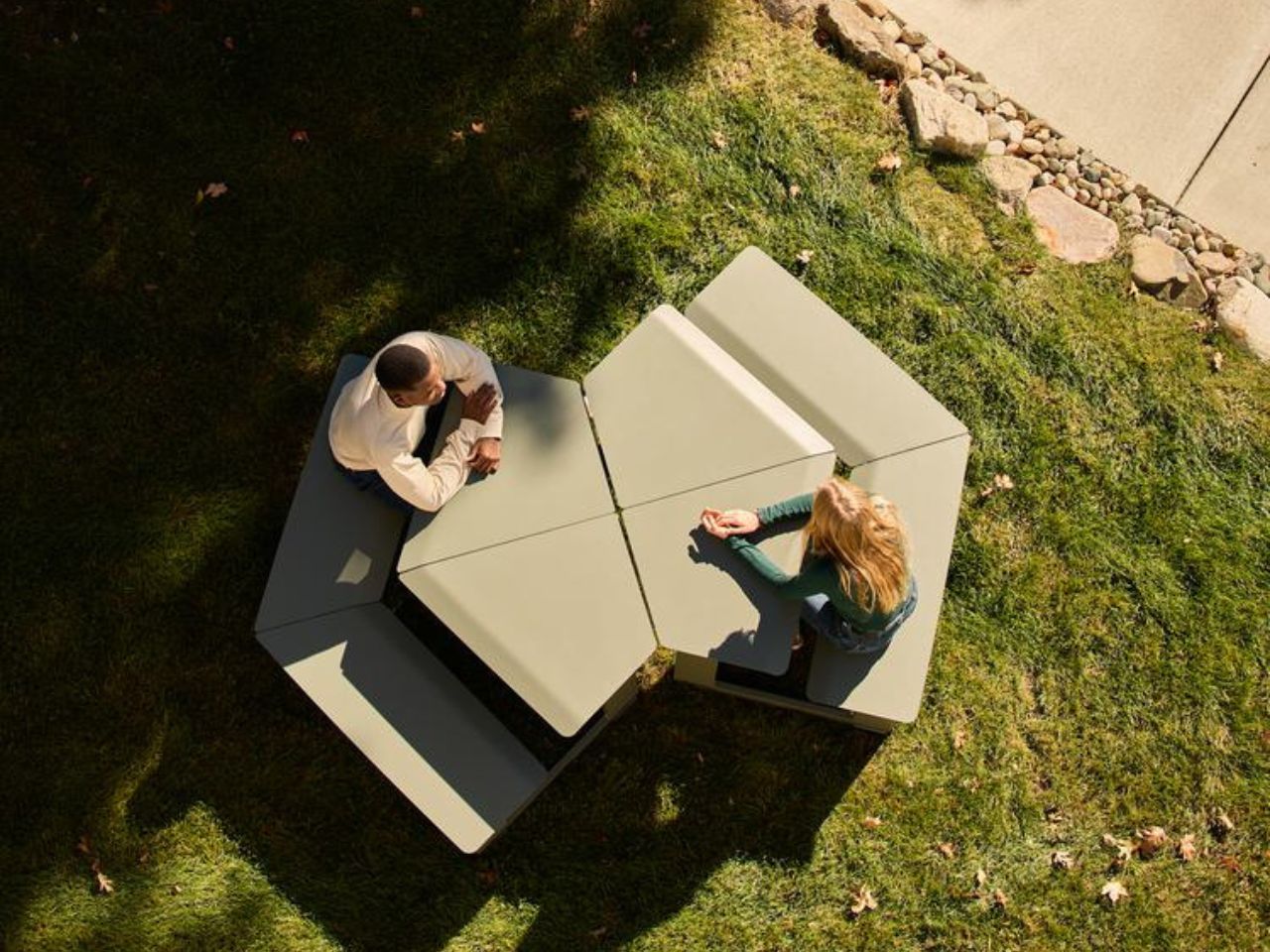
Public furniture has a quiet way of shaping how people move through the day. A bench can make someone pause. A table can turn an empty courtyard into a lunch spot. A slight angle in a seat can change whether people feel separate, side by side, or gently invited into conversation. Take-Out Wedge, part of Landscape Forms’ Take-Out collection designed by Rodrigo Torres, works within that subtle space between object and behavior.
The Take-Out collection expands Landscape Forms’ connected seating and dining table category through a system that feels clean, adaptable, and easy to reconfigure. The family includes singles, doubles, triples, wheelchair-accessible triples, tall versions, wedge units, and mini pieces for younger users. Each piece can stand on its own or come together with others, allowing outdoor spaces to shift throughout the day as people gather, separate, work, eat, wait, or simply linger.
Designer: Rodrigo Torres
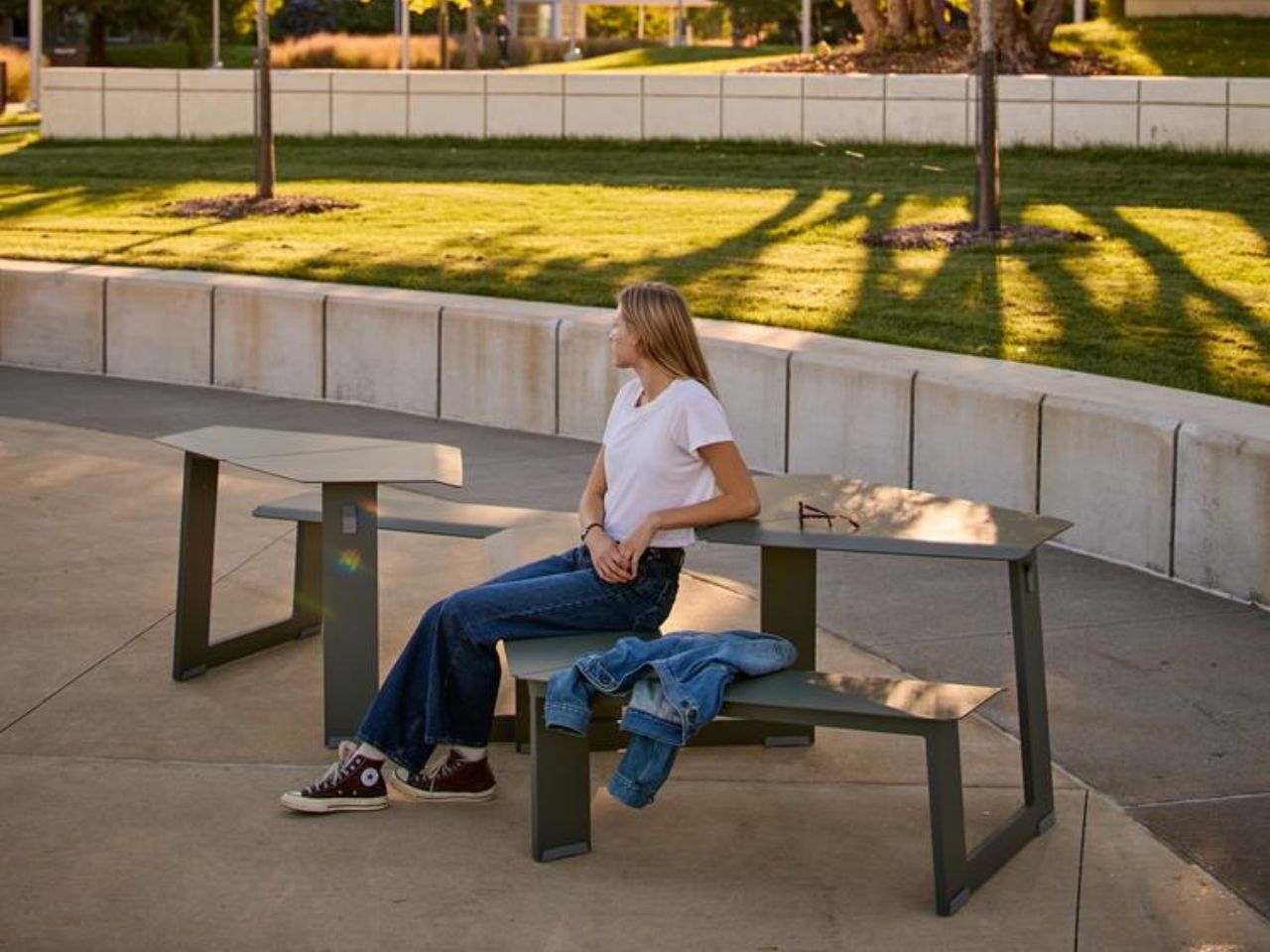
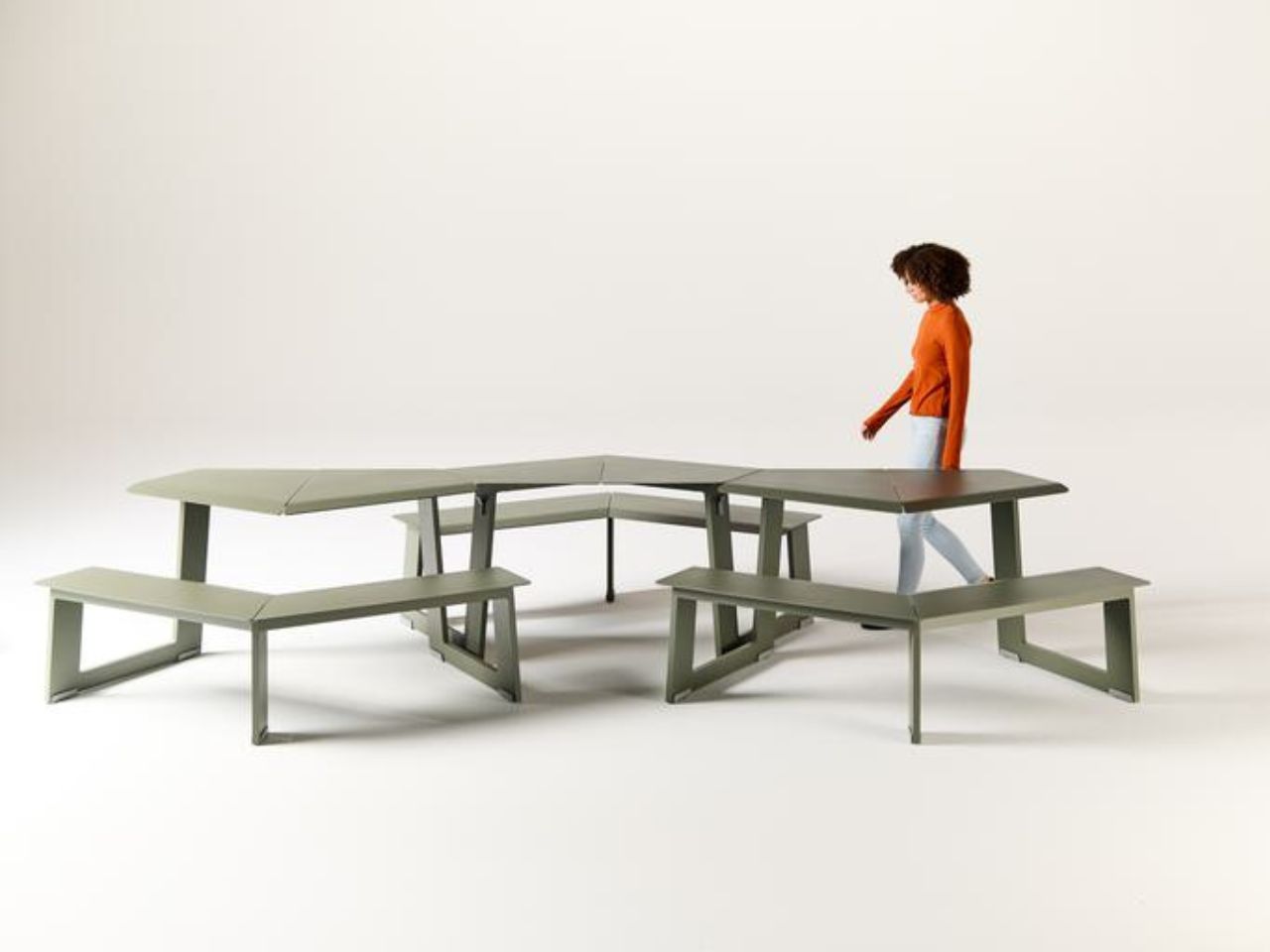
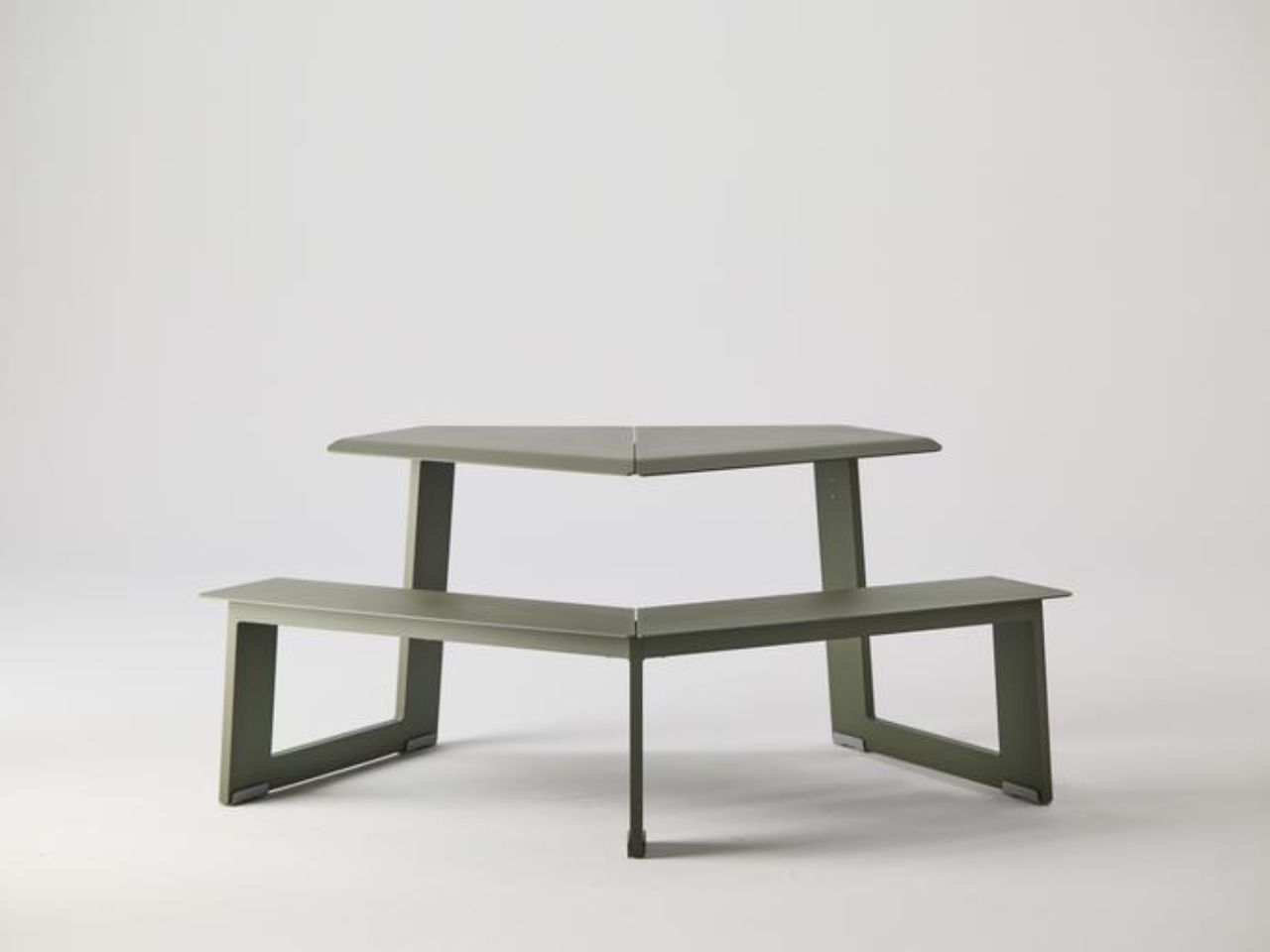
The Wedge is especially compelling because its form is doing more than creating a distinctive silhouette. Its angle changes the relationship between people. Traditional seating often places us in familiar social positions. Side by side feels relaxed and effortless, with both people sharing the same outward view. Face to face feels more direct, suited to conversation, focus, or collaboration. The Wedge creates something softer between the two: a posture where people can look outward together while still feeling naturally turned toward one another.
That middle ground is what gives the design its social intelligence. It does not push people into interaction, but it makes interaction easier. It allows connection to happen casually, without the intensity of a formal setup. In a campus courtyard, public plaza, hotel terrace, office garden, retail district, or civic space, that kind of nuance matters. People often need places that support informal moments: a quick chat, a shared break, a quiet lunch, a spontaneous meeting, or a pause between destinations.
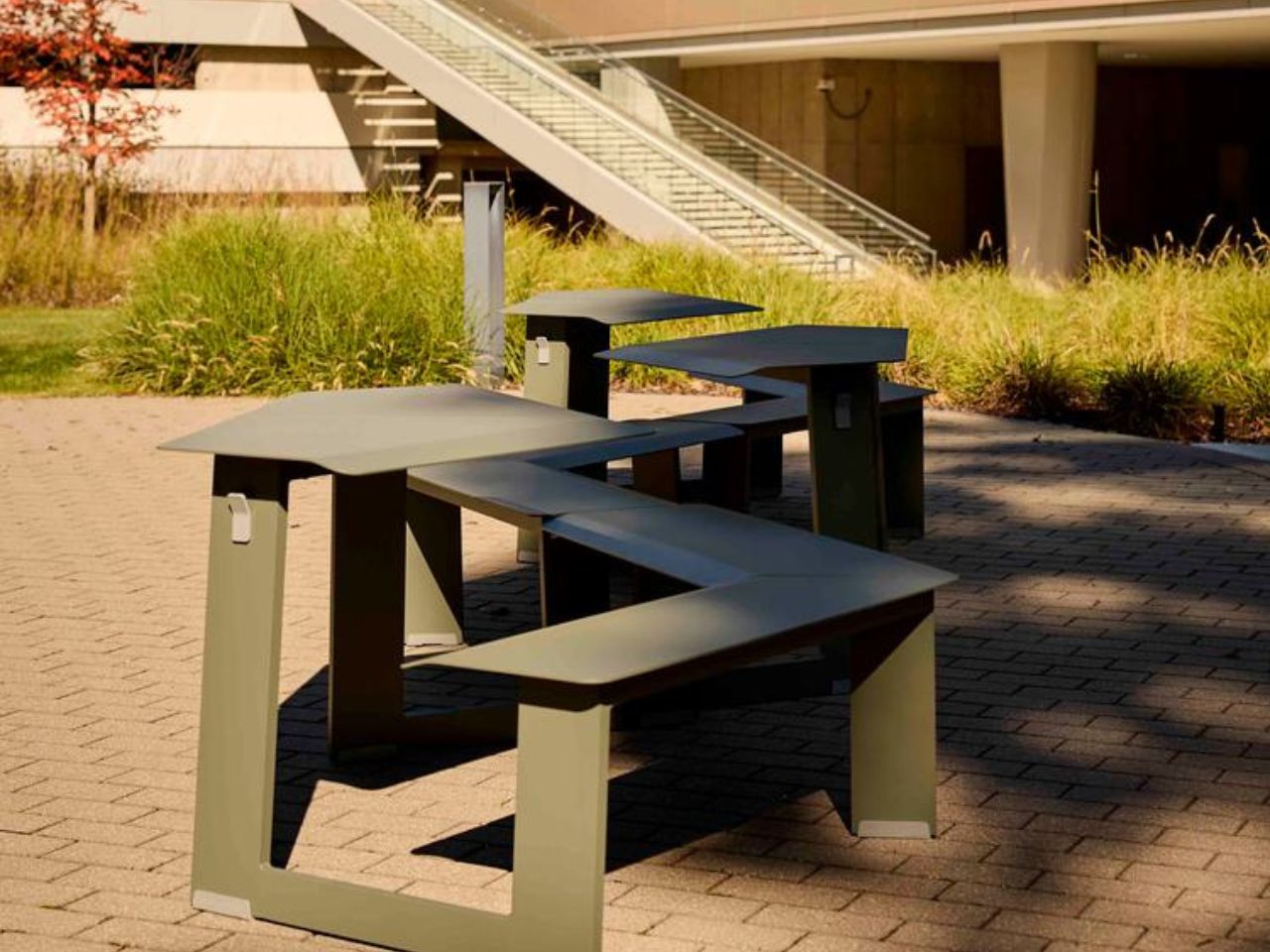
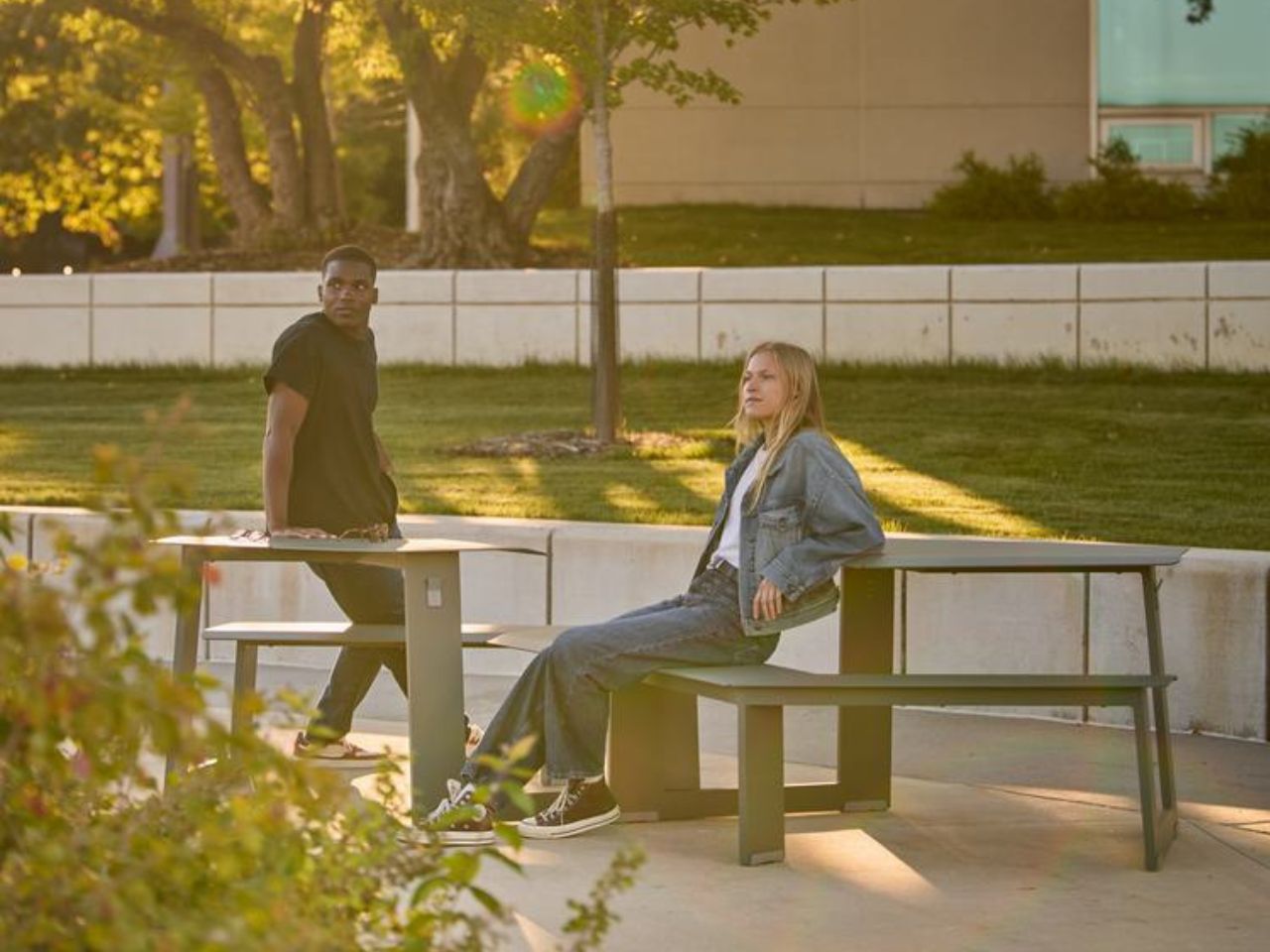
The beauty of Take-Out Wedge lies in how much spatial variety comes from such a simple geometric move. The wedge form allows designers and users to create soft arcs, faceted curves, radial clusters, and enclosed hexagonal hubs. A few units can support a small conversation. More pieces can shape a larger social zone. Arranged differently, the same system can feel open, intimate, directional, playful, or communal.
This is where Take-Out begins to feel less like standalone furniture and more like a framework for outdoor life. It does not need walls to define space. It can frame a pause point, activate an overlooked corner, shape a gathering area, or bring rhythm to an open setting. Placed side by side, the pieces can create long runs of seating for meals, meetings, or collaborative work. In a grid, they can give an outdoor area the energy of a café. Face to face, they become an expandable communal table.
The system also understands that flexibility has to work in real life. Color-matched connector brackets can secure adjoining units when a more permanent arrangement is needed. One-sided tables help make better use of edges, walls, or tighter spaces. An umbrella-hole tabletop option brings shade into the setup, with semi-circular cutouts that align when two units are placed across from each other. These details make the collection feel practical without taking away from its visual simplicity.
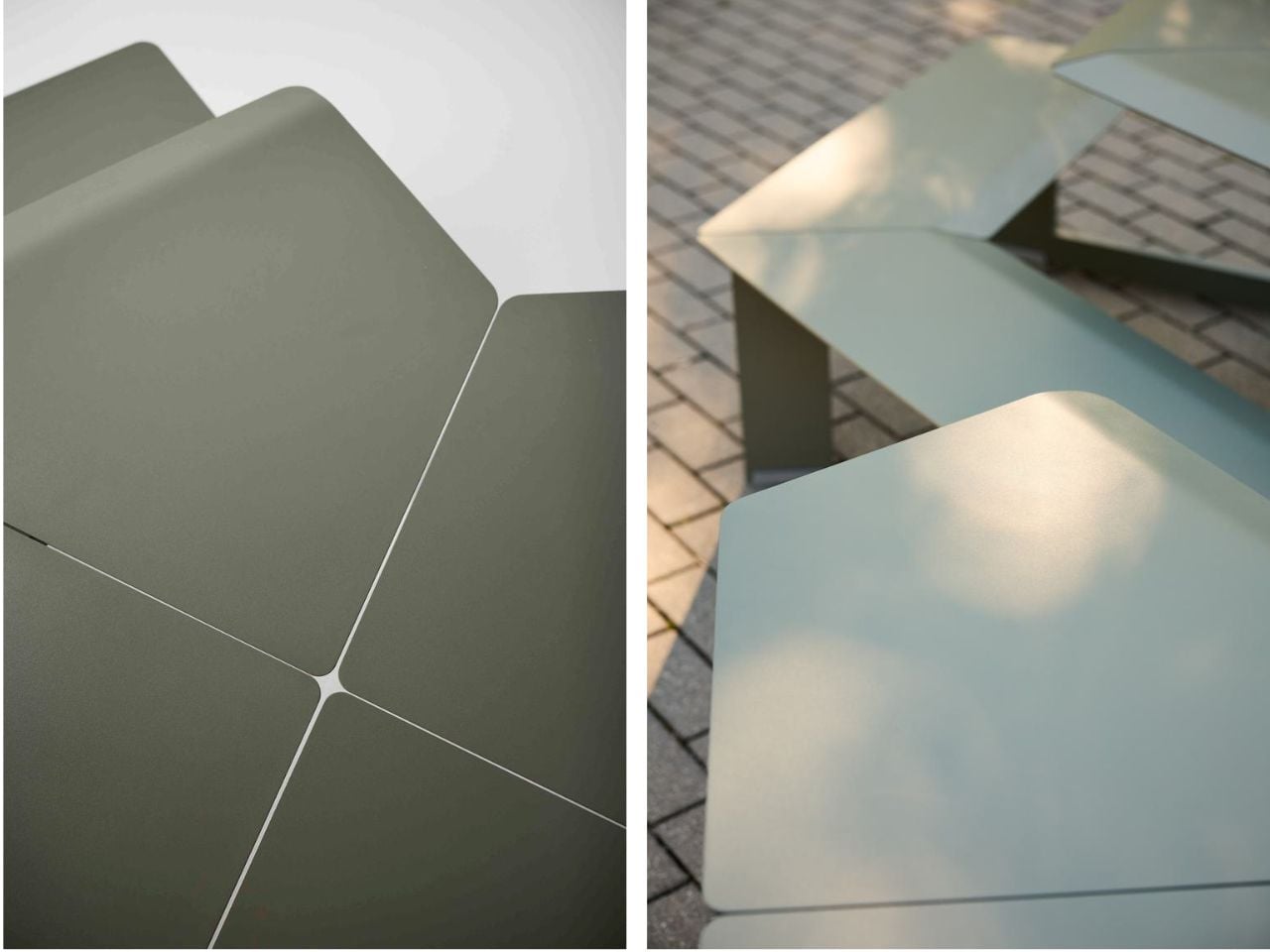
Comfort is handled with the same restraint. The form is minimal, but not cold. Gently curved edges soften the points where elbows and knees meet the furniture. Users can enter from either side or from behind, avoiding the awkwardness that often comes with shared outdoor tables. Sheet metal tops, extruded aluminum verticals, powdercoated finishes, and durable nylon glides support the realities of public use, where furniture has to withstand weather, movement, cleaning, and constant rearrangement.
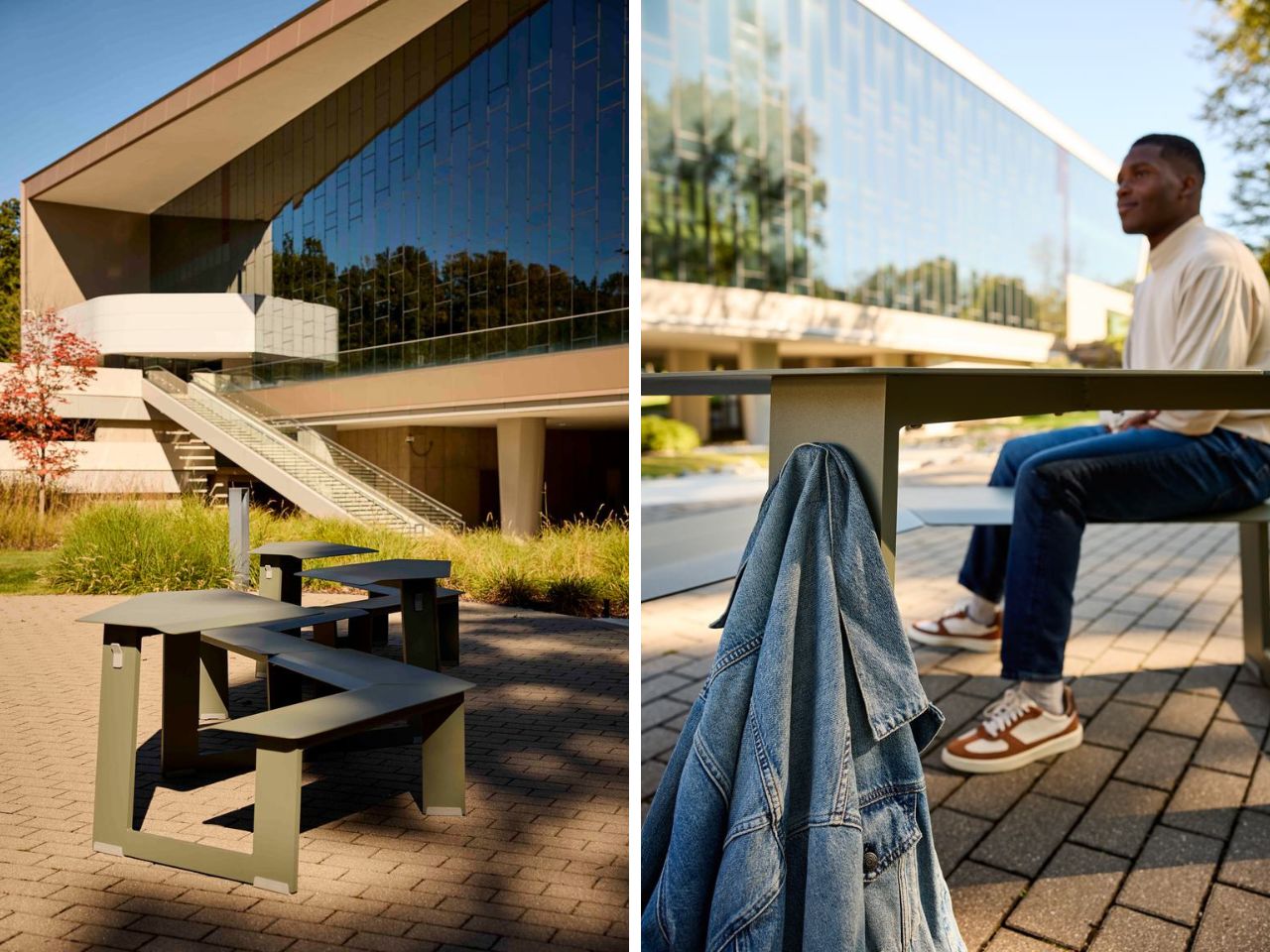
Take-Out also feels relevant because public and commercial spaces are being asked to do more. A campus lawn may need to support outdoor study in the morning, lunch in the afternoon, and casual hangouts by evening. A workplace terrace might shift between focused solitude and team conversation. A commercial plaza may need to feel active without becoming crowded. Take-Out responds to these changing needs by keeping the space open-ended.
The mini version brings the same thinking into children’s environments, from schoolyards and outdoor classrooms to family-friendly public spaces. It recognizes that younger users also need furniture that encourages gathering, movement, play, and shared experience. Good public furniture should work across ages, settings, and rhythms of use.
What makes the Wedge memorable is that it treats connection as something spatial. The way people sit in relation to one another carries emotional meaning. A small angle can make a space feel more open, more welcoming, or more alive. Public furniture has always had this potential, especially in urban commons where small moments of social life happen between larger routines. A good seating system can make people stay a little longer, notice each other more, and feel more at ease in shared space.
The same value carries into commercial environments. Offices, mixed-use developments, hospitality spaces, and retail campuses often bring people into proximity without really helping them connect. A system like Take-Out Wedge softens that distance. It creates casual opportunities for people to gather without making the moment feel staged. It helps shared spaces feel warmer, more active, and less siloed.
Take-Out Wedge is versatile because it understands that connection does not happen in one fixed format. Sometimes people want to sit beside each other and look out at the world. Sometimes they want to face each other and talk. Sometimes they need something in between. The Wedge gives form to that in-between moment, turning a simple angle into an invitation to share space more naturally.
Tanvi Joshi
If you liked the article, do not forget to share it with your friends. Follow us on Google News too, click on the star and choose us from your favorites.
If you want to read more like this article, you can visit our Technology category.