Table of Contents
The brands cited in AI Overviews can influence which companies buyers investigate next, even when no one clicks the source.
A buyer can click through to your website after making an important part of the decision.
An AI Overview can explain a technology, compare approaches, and surface brands while the buyer is still researching the market. By the time they click a result, they may already have an idea of which companies are credible, which solutions are worth exploring, and which brands belong on the shortlist.
For complex B2B purchases, that creates a gap between winning the click and influencing consideration. Traditional SEO metrics capture the first part. They don’t fully capture the second.
Search visibility no longer starts with the click
Traditional SEO reporting focuses on rankings, impressions, clicks, and sessions. These metrics still matter, but they no longer show the full search experience.
Consider a health care professional researching a premium pelvic floor chair. Their questions may include:
- How does magnetic pelvic floor stimulation work?
- How do different technologies compare?
- Which patients may benefit?
- How can the treatment be integrated into a medical practice?
- What should a clinic consider before investing?
Previously, the buyer would’ve visited several websites to build an understanding of the market.
Today, an AI Overview may summarize much of that information directly in the search results. The brands and sources included in the answer can influence which companies the buyer considers credible enough to investigate further.
This shift is already visible in our own search data. Several commercially relevant pelvic floor keywords now trigger AI Overviews, while PelviPower also ranks prominently in the traditional organic results, often in Position 1.
This creates a second layer of visibility to monitor. Ranking well is still important, but it’s no longer the only way a brand can shape the buyer’s first impression. Presence in AI Overviews is becoming part of the same competitive search landscape.

See where your brand appears in AI search, where competitors are winning, and what it takes to become the answer AI recommends.
Zero-click doesn’t always mean zero value
AI Overviews may reduce clicks for some informational searches. However, a search without an immediate website visit isn’t automatically worthless. A buyer may still:
- Remember the brand.
- Search for it later.
- Recognize it in a paid advertisement.
- Share the information internally.
- Return when the project becomes commercially relevant.
This matters in long B2B sales cycles.
A clinic or rehabilitation center will rarely invest in new technology after one interaction. Buyers need to understand the solution, compare alternatives, evaluate evidence, and discuss the investment internally.
An AI Overview can become one of several trust-building touchpoints before the inquiry.
Dig deeper: B2B brands rank in Google but appear in just 3% of AI Overviews
Being cited is different from ranking
Traditional SEO asks: “Where does our page rank?”
AI search introduces another question: “Is our content being selected as a supporting source?”
A page can rank well without being cited in an AI Overview. A source may also be included even when it isn’t the first traditional organic result.
This means B2B content should cover more than one target keyword. It should answer the connected questions surrounding the buying decision.
For a medical technology product, those questions may include:
- How the technology works.
- Who it’s intended for.
- How it differs from alternatives.
- What evidence supports it.
- How it fits into a professional workflow.
- What training and support are provided.
- What buyers should consider before investing.

The goal is to build a connected set of useful content that demonstrates expertise across the topic.
Dig deeper: 5 B2B content types AI search engines love
How to measure AI-driven traffic
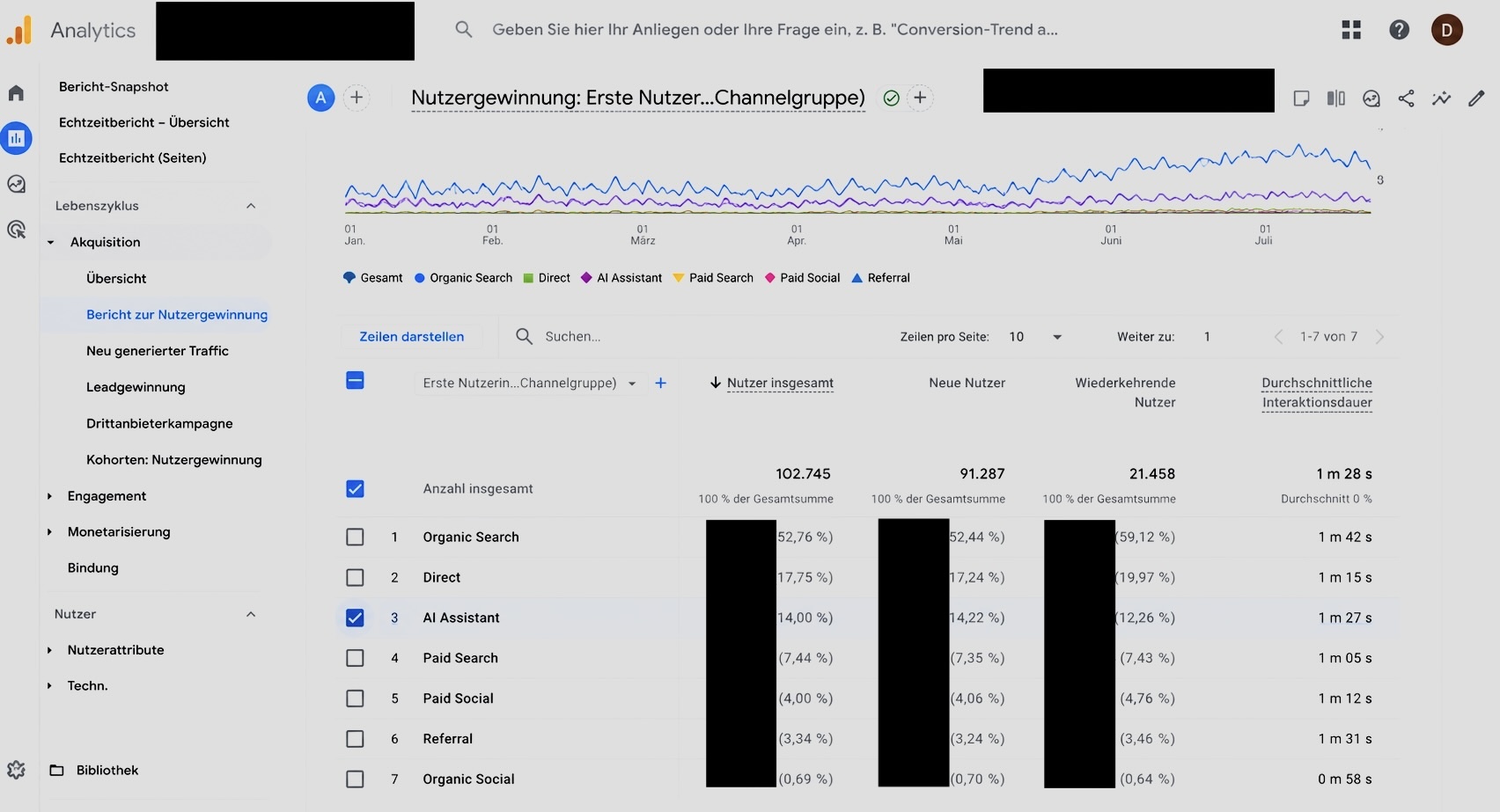
To measure what happens after a user reaches the website, I still consider GA4 the most important source of truth. It shows how visitors arrive, which pages they view, how they engage with the site, and whether they complete meaningful actions such as submitting a form, booking a consultation, or triggering another key event.
With traffic from AI assistants already grouped into a separate acquisition channel, marketers can compare it directly with organic search, paid search, direct traffic, and other sources. This makes it possible to assess not only the volume of AI-referred traffic, but also its value once users reach the website.
GA4 helps answer an important question: Do visitors arriving from AI assistants behave like high-quality prospects, or do they leave without taking meaningful action?
However, GA4 shouldn’t be treated as the final source of truth for lead quality. It can show that a form was submitted, but the CRM is still needed to determine whether that lead became qualified, entered the sales pipeline, or generated revenue.
AI visibility can support paid search
AI Overviews shouldn’t be treated only as an SEO topic because they can influence how buyers respond to every subsequent marketing touchpoint.
A potential customer may first encounter a brand inside an AI-generated answer while researching a problem, comparing technologies, or evaluating possible solutions. Even without clicking, that exposure can create familiarity and associate the company with a relevant area of expertise.
If the same brand later appears in a paid search ad, the ad is no longer introducing an unknown company. It’s reinforcing a name the buyer may already recognize. That familiarity can reduce uncertainty and make the advertisement feel more credible and relevant.
This may affect several signals across the buyer journey:
- Growth in branded searches.
- Higher recognition in paid search results.
- Stronger click-through rates.
- Greater trust when users reach the landing page.
- More effective competitor campaigns.
- Increased direct traffic.
- Greater brand familiarity during sales conversations.
The effect is difficult to isolate because AI exposure may happen days or weeks before the measurable click or conversion. A buyer may see the brand in an AI Overview, return through organic search, click a paid advertisement later, and finally submit a form through direct traffic.
Traditional attribution may credit only the final interaction, even though earlier AI visibility helped shape the decision.
For this reason, SEO, AI visibility, and paid search shouldn’t be evaluated as separate systems. They influence the same buyer at different stages of the same journey.
PPC performance often depends on trust that was created before the ad appeared. AI Overviews are becoming one of the places where that trust can begin.
Dig deeper: Why paid search could be your AI search advantage
Track your visibility across AI search, uncover missed opportunities, and grow your presence where customers are asking questions.
Search visibility should influence consideration
The objective shouldn’t be to appear in every AI Overview. An AI citation matters only when it reaches the right audience, answers a commercially relevant question, and helps move the buyer toward a decision.
B2B marketers should focus on credible, evidence-backed content, clear subject-matter expertise, and visibility that supports a qualified pipeline.
AI Overviews expand SEO’s role. Rankings and clicks still matter, but buyers increasingly form their first impression before reaching the website.
In complex B2B search, the conversion may happen on the site. Trust increasingly begins before the click.
Topics on this page
If you liked the article, do not forget to share it with your friends. Follow us on Google News too, click on the star and choose us from your favorites.
If you want to read more like this article, you can visit our Technology category.