Table of Contents
“FEATURE: What Makes Akudama Drive's Ending So Compelling?”
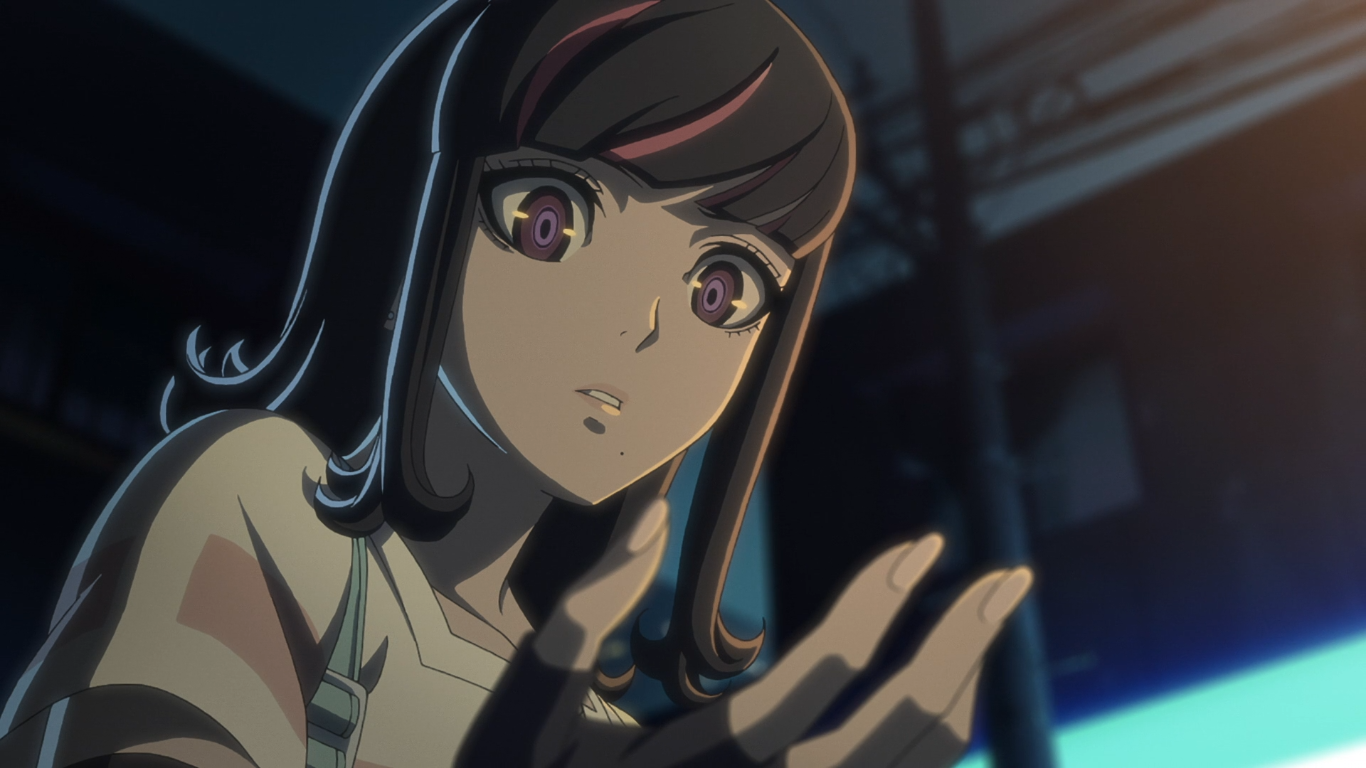
Anime endings are a curious thing. Some anime never end. Others end very abruptly. Still others receive a proper ending years after they air. The sheer number of anime series adapted from ongoing serials necessitate deferrals, original endings, and other compromises. But original anime have a spotty relationship with endings as well. For every anime ending that has become iconic (Spike’s final moments in Cowboy Bebop, Utena opening the Rose Gate) there are two that are controversial. Some anime, like Neon Genesis Evangelion, have multiple endings between the movie and TV series to choose from, all controversial.
Recently I’ve been thinking about the difference between endings that are good and endings that are great. Good endings might tie the narrative in a neat bow, leave the characters in a different place than where they started, or have the grace to end on a memorable set-piece. But great endings are transcendent. The best endings don’t simply give the audience an exit but open a door to somewhere new. Some even redefine the whole story in the bargain. Some of these are planned, others improvised. But if it works, you know it.
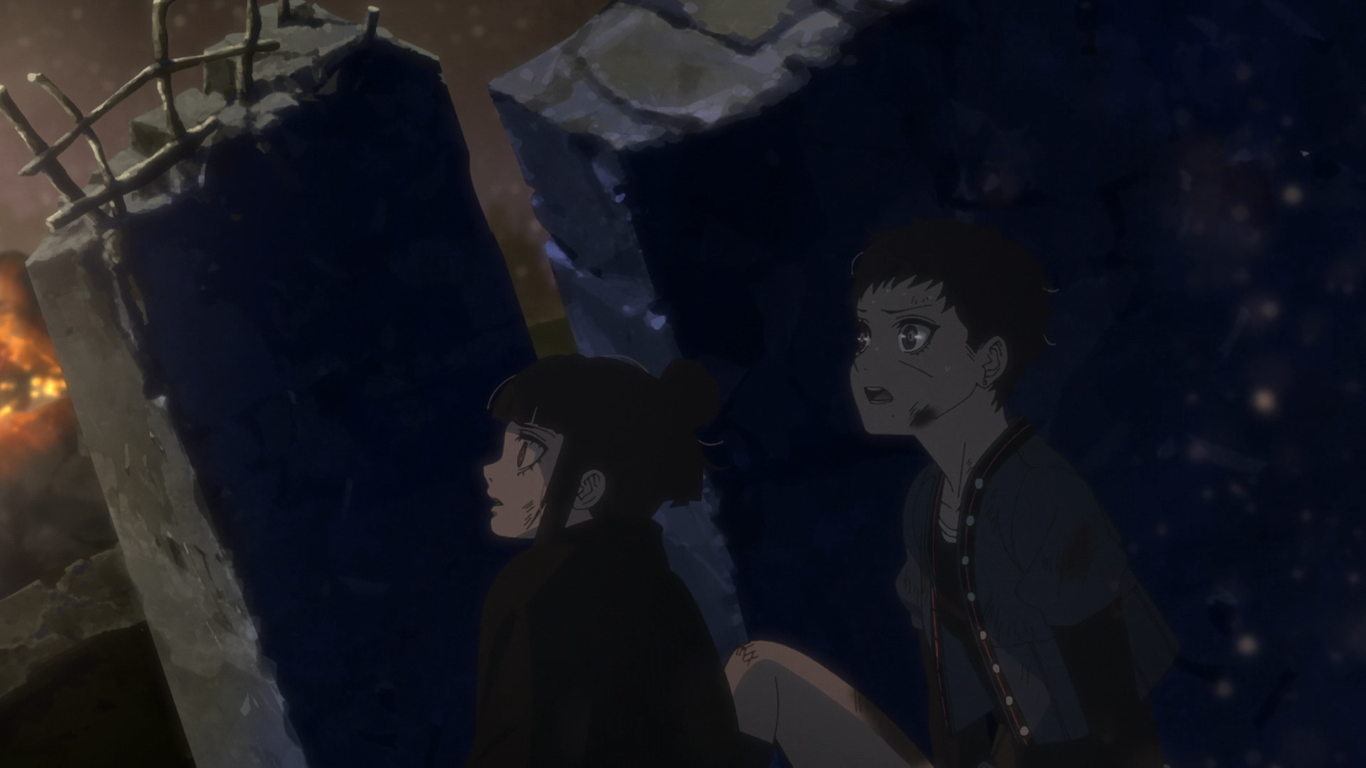
Akudama Drive is a pretty good show with a great ending. For most of its run, the series is a cyberpunk thriller about superpowered criminals in Kansai (and one ordinary person going by the name of Swindler) running a train heist. Four episodes in, we have our first twist: our antiheroes have been hired not to steal valuables but to retrieve artificial children engineered for the neighboring province of Kanto. From that point on, Akudama Drive ramps up as the cast sacrifices themselves for what they believe in a series of increasingly bombastic setpieces. The story climaxes in the Kanto wasteland, where surviving cast members Swindler and Courier save the artificial kids Brother and Sister from being consumed by a hungry ruling AI. The power of a found family triumphs over sinister technological collectivism and our heroes walk back through the tunnel to Kansai. If the series had ended there, it would have been a solid but expected ending.
But the finale of Akudama Drive is something else entirely. Having escaped Kanto, our heroes quickly realize that their journey is not yet over. The Kansai “Execution Division” is hunting for them on the streets. The AI in Kanto still hopes to retrieve the children and, through them, ensure its own immortality. The government has declared martial law and citizens are being executed on the streets. The final villain of Akudama Drive is something much scarier than a science fictional AI construct or an exaggerated monster like fellow criminals Doctor or Cutthroat. It is the state's monopoly on violence and surveillance.
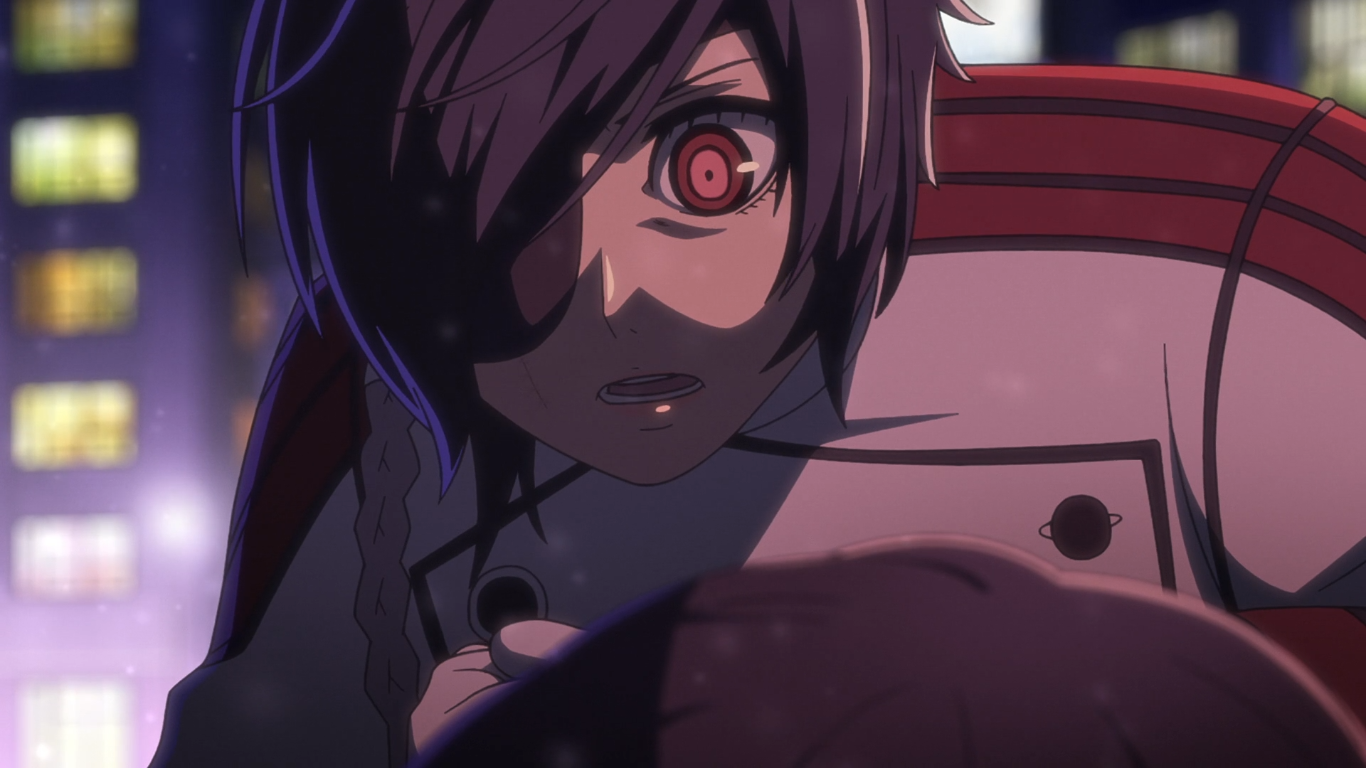
Akudama Drive’s finale gives us a string of excellent character moments, one after the other. Swindler sacrifices herself to the Executioners to engineer a public spectacle and uprising so that Brother and Sister have a chance to escape in the chaos. Pupil the vengeful Executioner loses her protege Junior to an angry child with a gun; by the time she realizes her complicity in perpetuating the endless cycle of violence that killed her ward, it is far too late for either of them. Courier, the last of the Akudama to survive, fends off a flotilla of weapon-mounted airships with nothing but his armed motorcycle. He’s the least personable of the cast, committed to nothing but his job, but he’s also the one who gives artificial children Brother and Sister the confidence to escape on their own terms.
The final episode is also notable in its use of framing and technique. The opening minutes show us a glimpse of the entrance to a far-off tunnel that Brother and Sister will enter at the end of the episode. As Swindler is stabbed through the heart by an Executioner, she sees a vision of this tunnel just before she dies. The viewer still doesn’t know what to make of it at this point, but I believe Swindler does. It’s a reminder of the children who led her to change herself, and who in return were changed by her. It’s a vision only she can see, a spark of knowledge in the moment just before her death. Additionally, the finale is full of small pay-offs to earlier material: the Rabbit and Shark TV puppets instigating the revolution, Swindler receiving her own proper “Swindler” name card, even Brother shielding Courier with his body purposefully rather than being used by another. A succession of familiar images and backgrounds at the end of the episode is recontextualized by fallen snow, a reminder that the violence of the past is now buried and unchangeable.
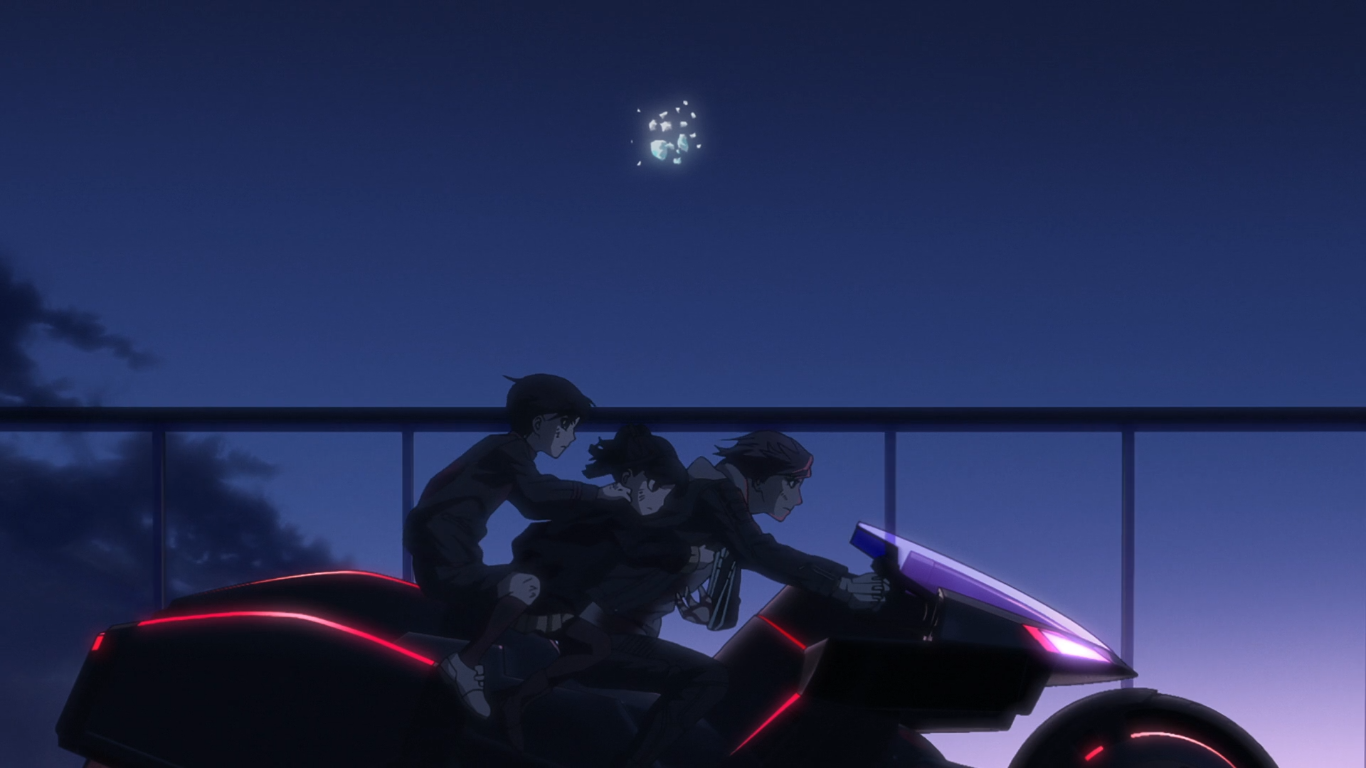
Akudama Drive begins as a story about individual behavior. Swindler joins a gang of criminals to pay back a debt and becomes an enemy of the state in order to do what she believes to be the right thing. During the finale, Courier gives Brother and Sister the same 500 yen coin Swindler once sought to return to him. By that point, the meaning of the coin has changed. It is no longer a marker for personal transformation, but a token you give and receive. Swindler inspires Courier, Courier teaches Brother the importance of self-determination. Sister learns through Swindler’s care that she is not an object but a person, with responsibilities to others. She passes that same lesson to Brother, and it is that shared familial love that grants them the will to escape from the airships with their own two feet. Even the people of Kansai are changed by Swindler’s example, inspired to take back the streets with protest signs and Molotov cocktails. By the end of the series, Akudama Drive is no longer about how we change ourselves. It is about how we change others.
Once in a while, I find myself compulsively watching the finale of Akudama Drive. I always tear up at the end, as Brother and Sister walk through the tunnel entrance. I can’t say the show is perfect, or that the whole of it captures me in the same way. But something about the way it all comes together feels like so much more than the sum of its parts. Original anime has long been outstripped by the sheer number of adaptations produced each year. I don’t know if Akudama Drive was particularly successful, but it’s easily the series of 2020 that surprised me the most. It’s a rare feeling, being caught off guard by something you thought was good but revealed itself, in the end, to be great. As long as anime continues to surprise me, I’ll continue watching for a while yet.

What is your favorite scene in Akudama Drive? What's your favorite anime ending? What's your least favorite anime ending? Let us know in the comments!

Adam W is a Features Writer at Crunchyroll. When he isn't rewatching the few episodes of Ping Pong the Animation over and over, he sporadically contributes with a loose coalition of friends to a blog called Isn't it Electrifying? You can find him on Twitter at: @wendeego
If you liked the article, do not forget to share it with your friends. Follow us on Google News too, click on the star and choose us from your favorites.
For forums sites go to Forum.BuradaBiliyorum.Com
If you want to read more anime-manga articles, you can visit our anime-manga category.

