Table of Contents
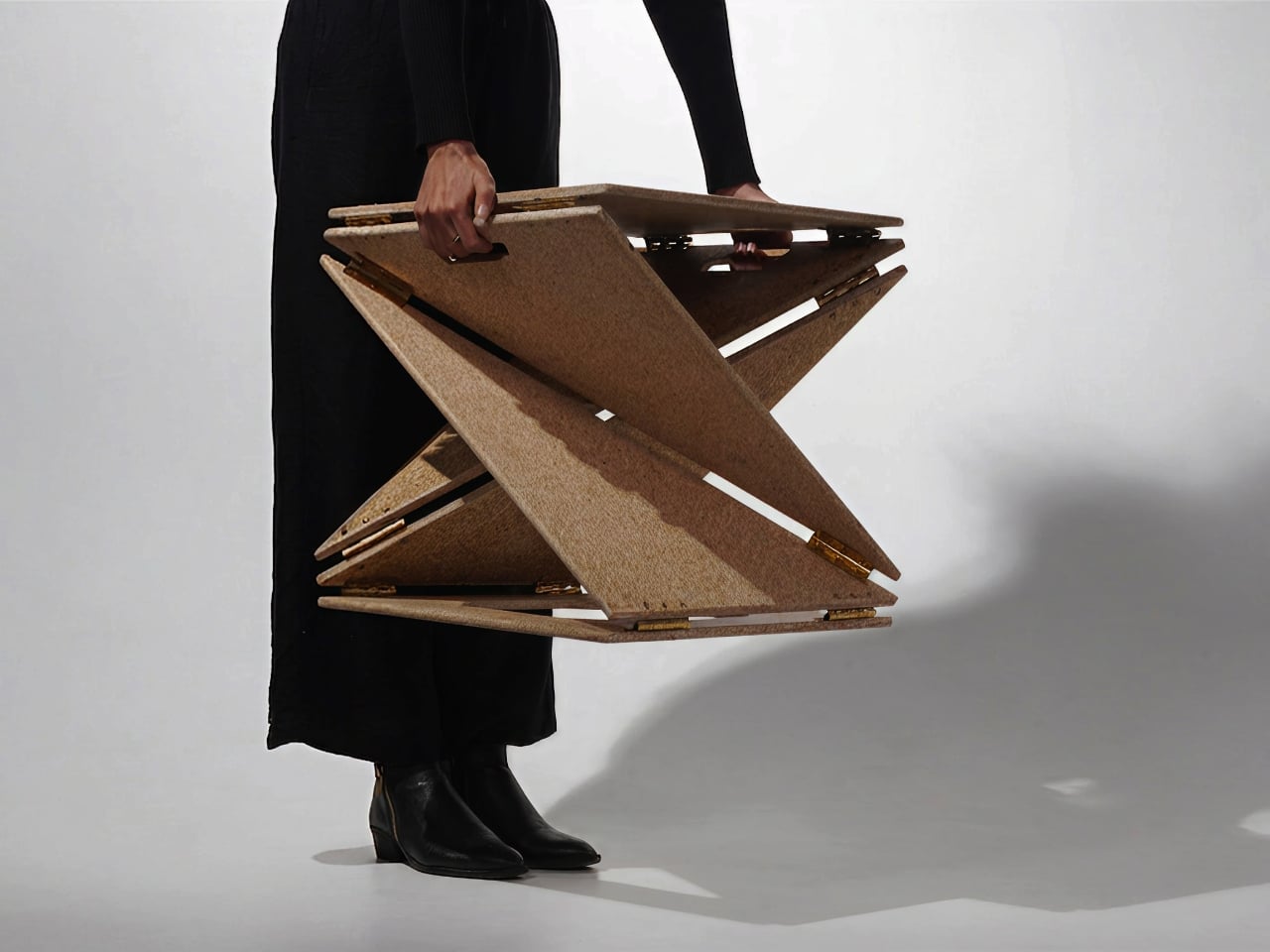
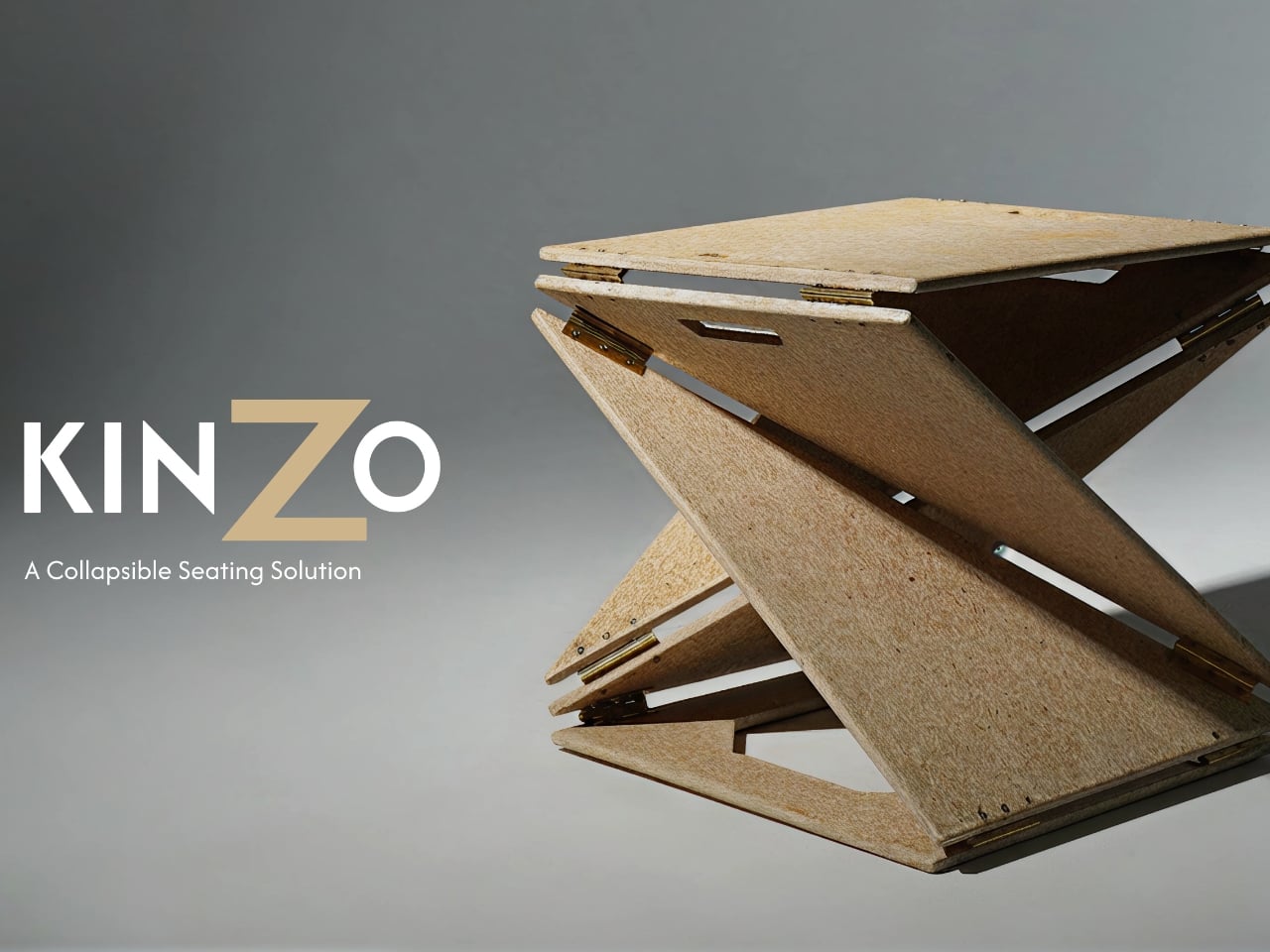
The flat-pack furniture concept is hardly new. IKEA built an empire on it. But Kinzo, a collapsible stool designed by students Jack Rathod, Pingla More, Kuldeepsingh Yadav, and Gayathri Rakesh, does something that flat-pack rarely bothers to do: it makes the transformation genuinely satisfying.
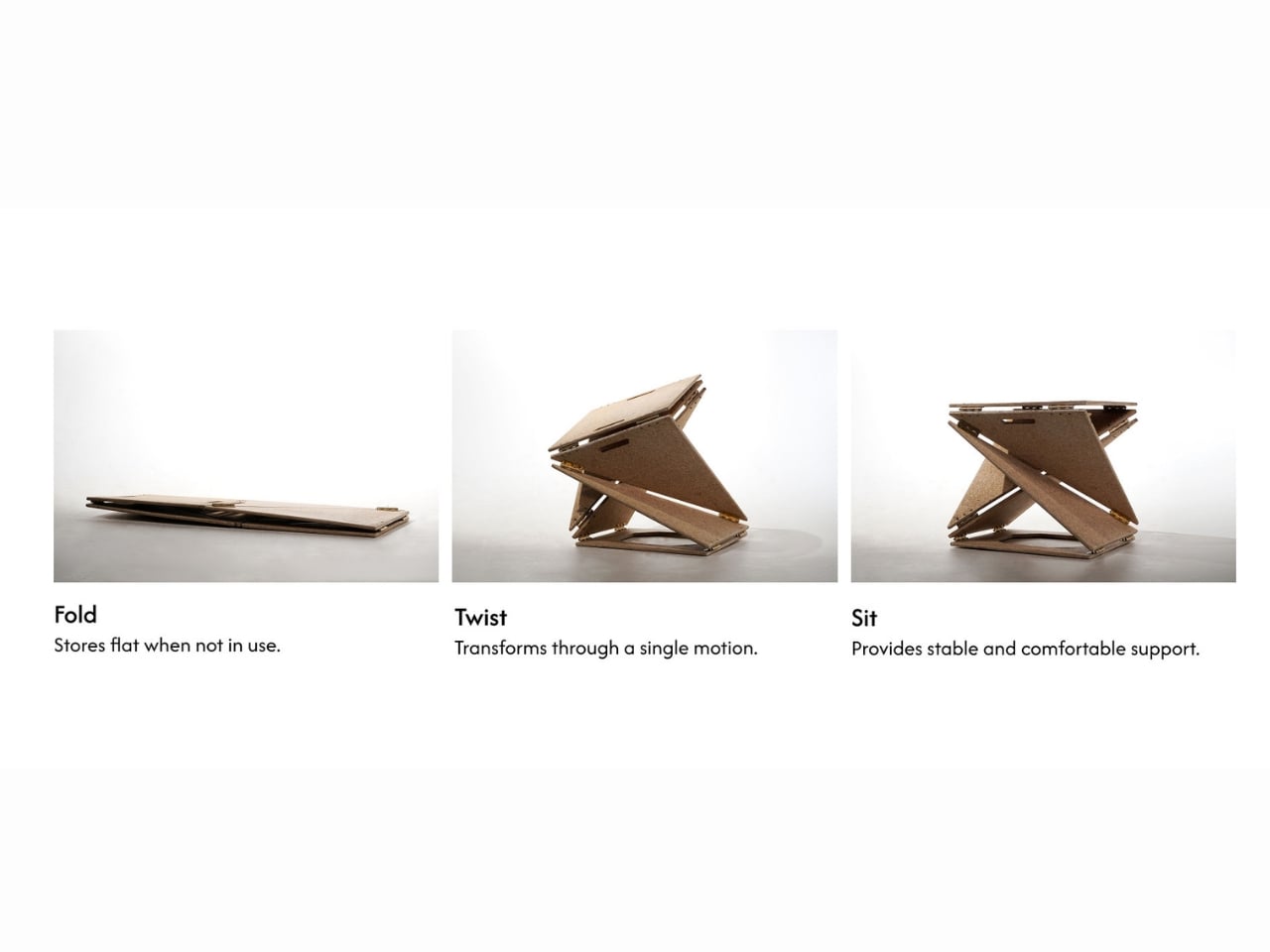
The mechanism is a single twist. Flat to upright, folded to functional, all in one motion. No tools, no assembly, no instruction booklet you’ll lose before you’ve finished reading it. The stool folds completely flat when you’re done and tucks away wherever you have a slim gap to spare. Carry it to a café, slide it under a bed, lean it against a wall in a studio apartment. For anyone working with limited space, that kind of portability is not a minor detail.
Designers: Jack Rathod, Pingla More, Kuldeepsingh Yadav, Gayathri Rakesh
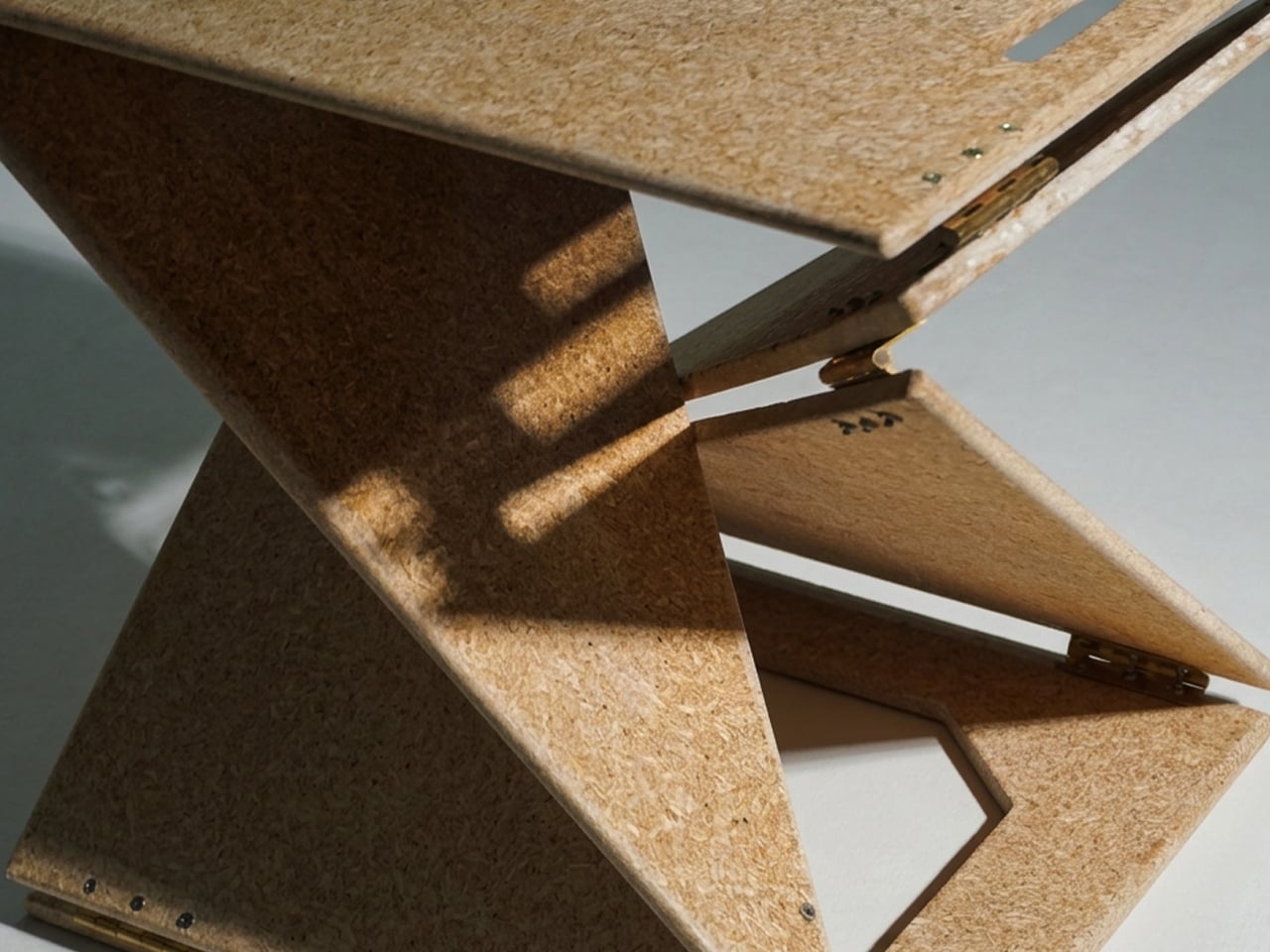
The inspiration came from origami. The design team used paper as a stand-in for Craste board during early prototyping, testing different joint structures and fold geometries before settling on a basic origami fold as their core starting point. That methodical approach shows clearly in the final form. The geometry isn’t decorative, it’s structural. The central X-shaped form locks naturally under load, meaning the more weight placed on it, the more stable it becomes. Gravity does the work, which is exactly the kind of engineering thinking that separates a well-considered design from one that just looks interesting in photographs.
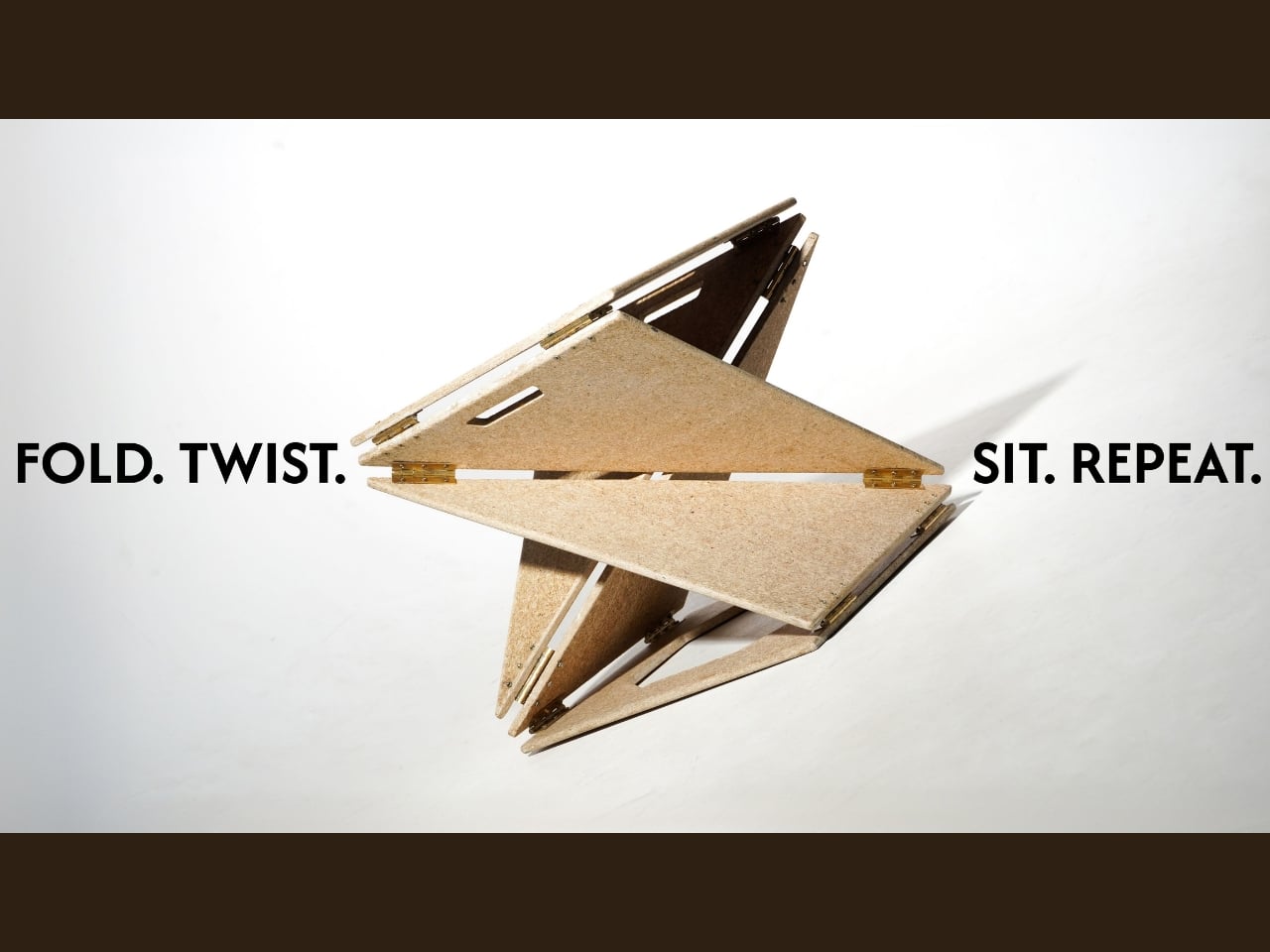
Brass hinges hold the panels together, chosen for both reliability and manufacturing compatibility. The cut-outs along the edges aren’t just visual breaks in the material. They align precisely to create a grip interface, making the stool comfortable and intuitive to carry. None of this was left to chance. The team built 1:5 scale paper models before moving to a full 1:1 prototype, stress-testing the joinery and geometry before committing to the final form. They’re the kind of details that show up when a design team has thought through the full lifecycle of an object, from the moment you pick it up to the moment you sit down.
The material deserves its own mention. Kinzo is made from Craste boards, engineered from agricultural residues and completely formaldehyde-free. That last part matters more than it might seem. Most manufactured wood products contain adhesives and binders that off-gas over time. Choosing a material that sidesteps that entirely isn’t just a sustainability talking point. It’s a considered decision about what kind of object you want in a space where people actually live and breathe.
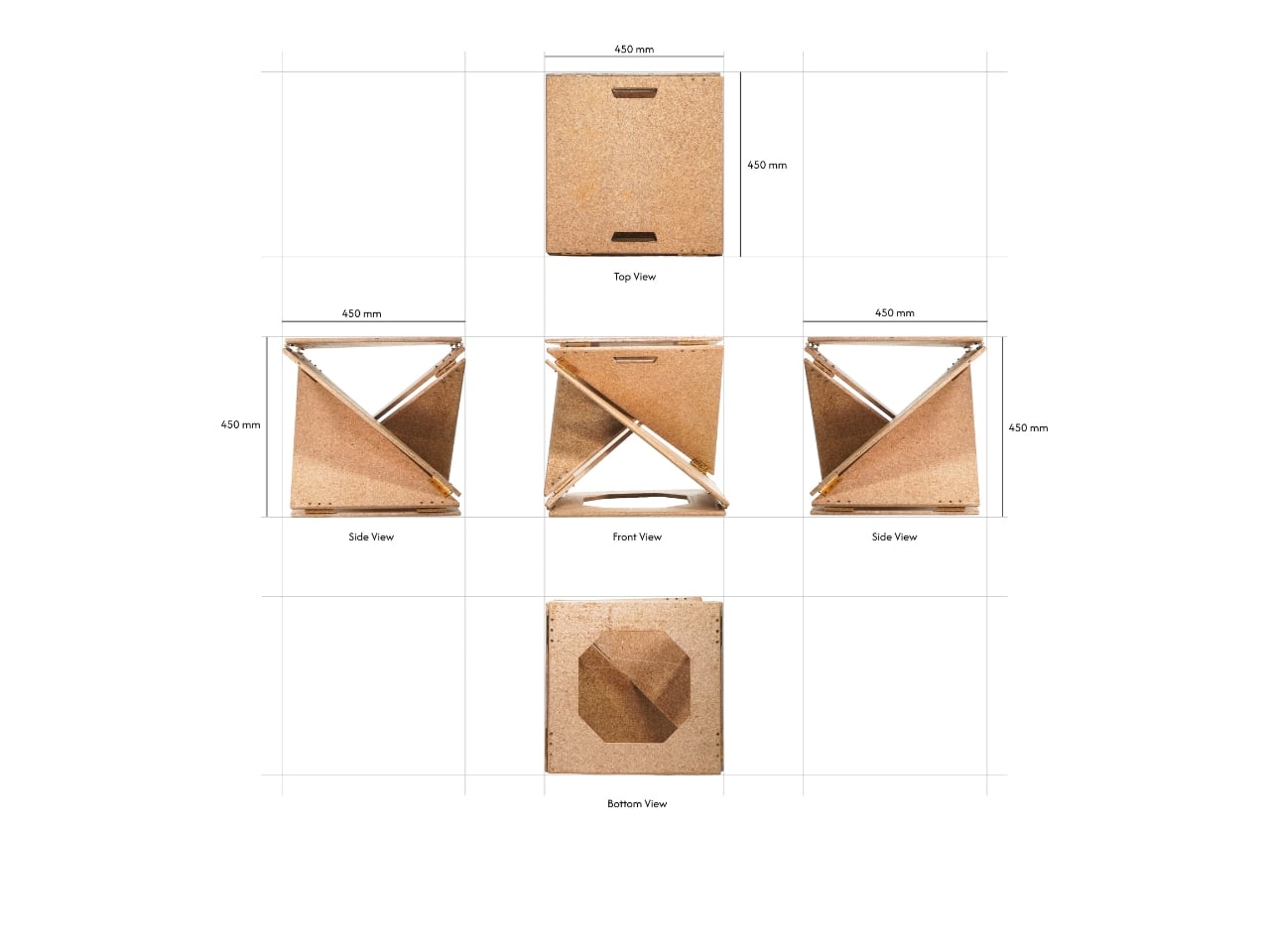
The brief came from Agrikraft 2026, India’s National Furniture Design Competition hosted by Craste. Student competitions can sometimes feel like exercises in presentation over substance, but the constraint of designing around a specific, real-world material tends to produce sharper results. You can’t be vague when the board has a known weight, texture, and set of properties. The Kinzo team clearly used that constraint as a guide rather than a limitation.
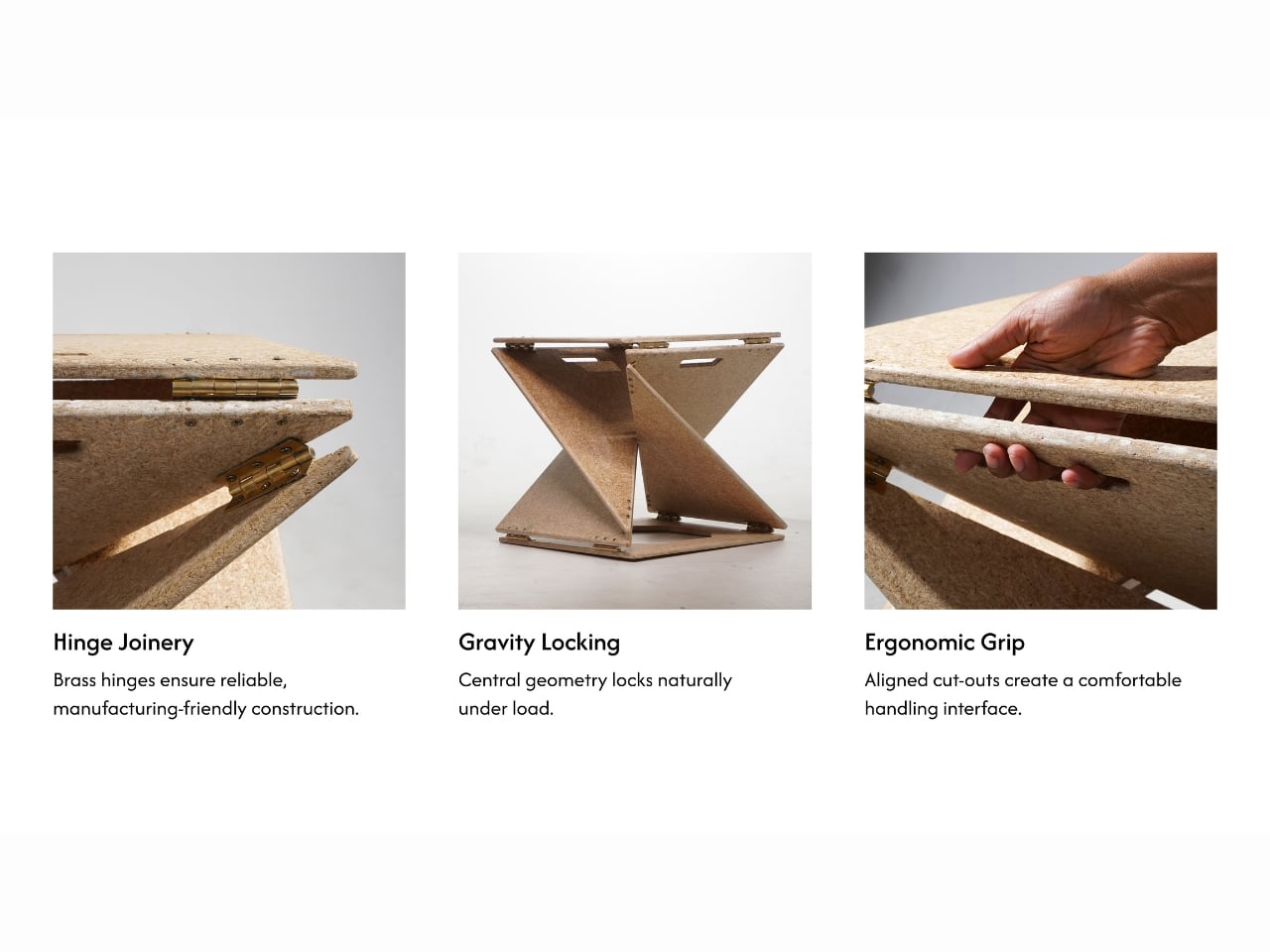
Worth noting too is how context-agnostic the design is. A stool that works equally well in a bedroom corner, a café, and a lounge space without looking out of place in any of them is solving a harder problem than it appears. Most seating communicates a very specific setting. Kinzo doesn’t. Its warm, natural texture and clean geometric form read differently depending on where they land. That kind of quiet versatility is genuinely difficult to achieve.
Student work often gets praised with a kind of tempered enthusiasm: impressive for its level, promising for what might come next. Kinzo doesn’t need that qualifier. It’s a resolved piece of design that addresses real constraints with real intelligence, built from a material with a genuine reason to exist, using a mechanism that earns its elegance. The fact that it came out of a competition is almost beside the point.
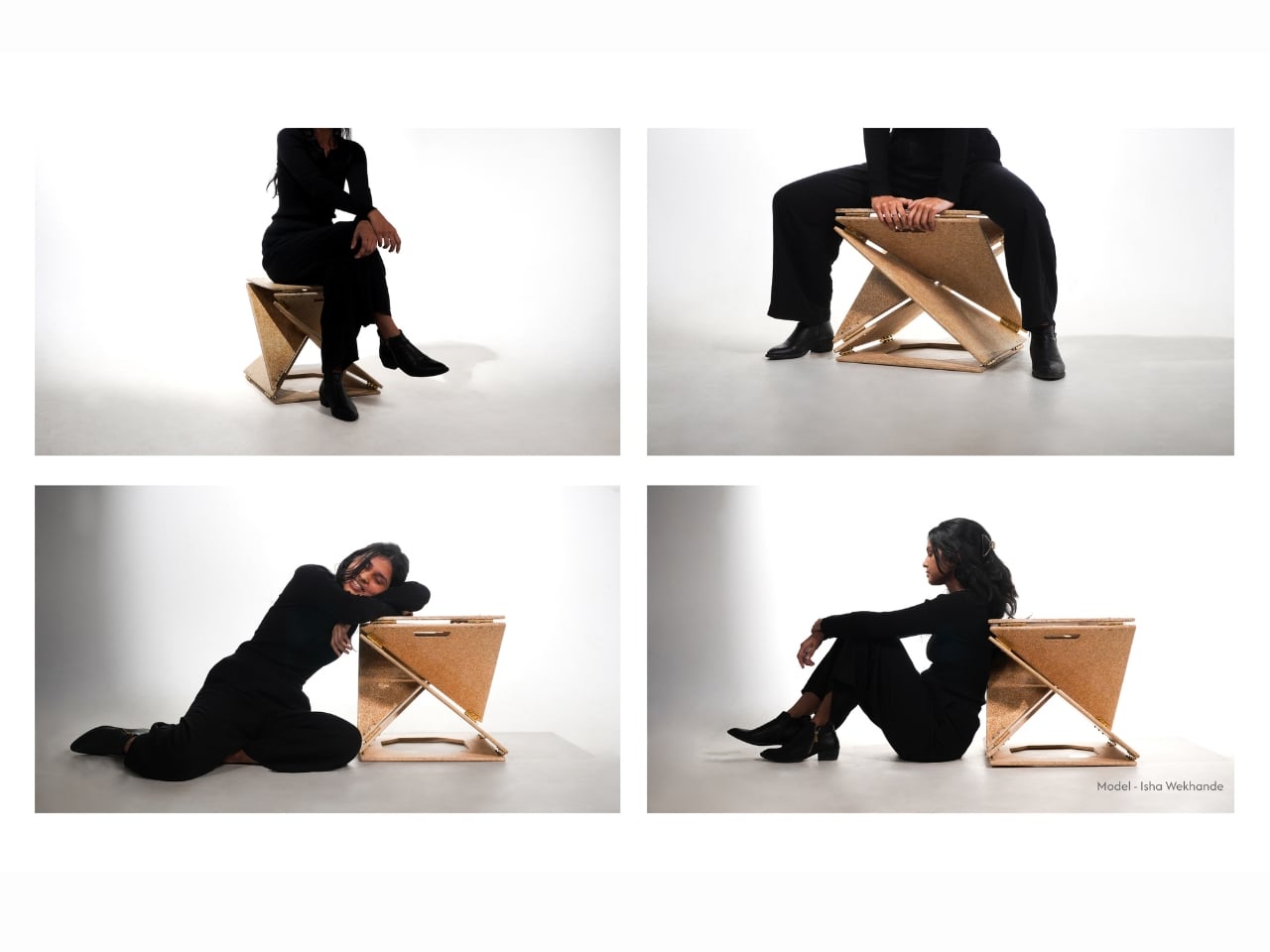
Good seating is underrated. We spend enormous attention on the surfaces we look at and very little on the things we actually rest on. Kinzo is a reminder that a stool can carry a point of view. This one carries several.
Ida Torres
If you liked the article, do not forget to share it with your friends. Follow us on Google News too, click on the star and choose us from your favorites.
If you want to read more like this article, you can visit our Technology category.